
Community associations are a regular part of real estate transactions. For title and escrow professionals, they introduce additional documents, financial obligations, and disclosures that must be confirmed before closing.
Two of the most common charges tied to these communities are condo fees and HOA fees. At first glance, they may appear similar. Both support the maintenance and management of shared property. However, the structure behind these fees is different, and that difference can affect how associations calculate dues, collect payments, and disclose costs during closing.
Understanding the difference between condo fees and HOA fees helps real estate professionals identify potential costs early, interpret association documents correctly, and explain financial obligations to clients during a transaction.
This guide explains how condo fees work, how HOA fees differ, and what each type of fee usually covers.
What Are Condo Fees?
Before looking at condo fees, it helps to understand how condominiums are structured.
A condominium, commonly called a condo, is a type of residential property that contains multiple units within a shared building or complex. Each owner typically owns the interior space of their individual unit, while the common areas of the property are owned collectively by all unit owners.
Shared areas may include:
- hallways
- elevators
- lobbies
- parking garages
- swimming pools
- fitness centers
- outdoor common areas
Because these shared elements require maintenance and management, condominium associations collect condo fees from each unit owner.
Condo fees, sometimes referred to as maintenance fees or strata fees, are recurring payments used to maintain and operate the shared property.
These fees typically fund:
- maintenance of shared building areas
- exterior building repairs
- landscaping for common areas
- shared utilities or services
- building-level insurance policies
- amenities such as gyms or pools
- reserve funds for future repairs
Condo fees are mandatory for owners in the association. Failure to pay them may result in late fees, collection actions, or liens depending on the association’s governing documents and state laws.
What Are HOA Fees?
Homeowners association fees, usually called HOA fees, apply to properties located within communities governed by a homeowners association.
These communities are commonly made up of single-family homes or townhomes, where each owner maintains their own property while the association manages shared spaces and community services.
HOA fees are used to maintain the neighborhood and ensure compliance with community standards established by the association’s governing documents, usually called Covenants, Conditions, and Restrictions (CC&Rs).
HOA fees commonly fund:
- landscaping in shared areas
- parks and playgrounds
- community pools or clubhouses
- trash collection
- snow removal
- private road maintenance
- neighborhood lighting or security
Like condo fees, HOA fees are mandatory for homeowners within the association.
Condo Fees vs HOA Fees: Key Differences
Both condo fees and HOA fees support the maintenance of shared spaces, but the structure behind these fees is different.
The biggest distinction comes from ownership structure and maintenance responsibility.
| Feature | Condo Fees | HOA Fees |
| Property type | Multi-unit buildings | Neighborhood communities |
| Ownership | Interior of unit | Entire home and lot |
| Shared responsibility | Building structure and amenities | Community spaces |
| Fee calculation | Often based on unit size or ownership percentage | Often equal or tiered |
| Typical cost level | Often higher | Often lower |
Because condominium associations often maintain the building itself, condo fees are frequently higher than HOA fees. However, some master-planned communities with extensive amenities may have higher HOA dues as well.
What Condo Fees Typically Cover
Condo fees usually support a wide range of building-related costs.
Common expenses include:
- maintenance of shared areas such as lobbies, gyms, and hallways
- landscaping for shared property
- exterior building maintenance
- security or concierge services
- waste management and recycling
- parking structures
- shared utility costs in some buildings
- amenities such as pools or lounges
Many condo associations also maintain a master insurance policy covering common elements of the building. Coverage can vary depending on the association, and unit owners often carry their own HO-6 insurance policy for interior coverage.
Another key component of condo fees is the reserve fund. This fund is intended to pay for major future repairs such as roof replacement, structural repairs, or elevator upgrades.
Reserve funding levels vary between associations and can influence the financial health of a property.
What HOA Fees Typically Cover
HOA fees generally focus on services that benefit the community rather than individual homes.
Common uses include:
- maintenance of parks and green spaces
- upkeep of walking trails and recreational areas
- landscaping of shared property
- community pool or clubhouse maintenance
- snow removal in shared areas
- private road or sidewalk maintenance
- trash collection and recycling services
In many single-family HOA communities, homeowners remain responsible for maintaining their own property, including the exterior of the home.
However, some townhome-style communities may include exterior maintenance as part of the HOA’s responsibilities. The association’s governing documents define exactly what the HOA maintains.
Ownership Structure: Condo vs HOA
Ownership structure explains most of the differences between condo fees and HOA fees.
In a condominium association, owners typically own:
- the interior of their individual unit
- a percentage interest in shared areas of the building
The association manages and maintains the shared infrastructure of the building.
In an HOA community, owners usually own:
- their home structure
- the land on which the home sits
The association manages common areas of the neighborhood rather than the homes themselves.
Because condo associations manage more physical infrastructure, they typically handle more building-related expenses.
Fees vs Fines in Community Associations
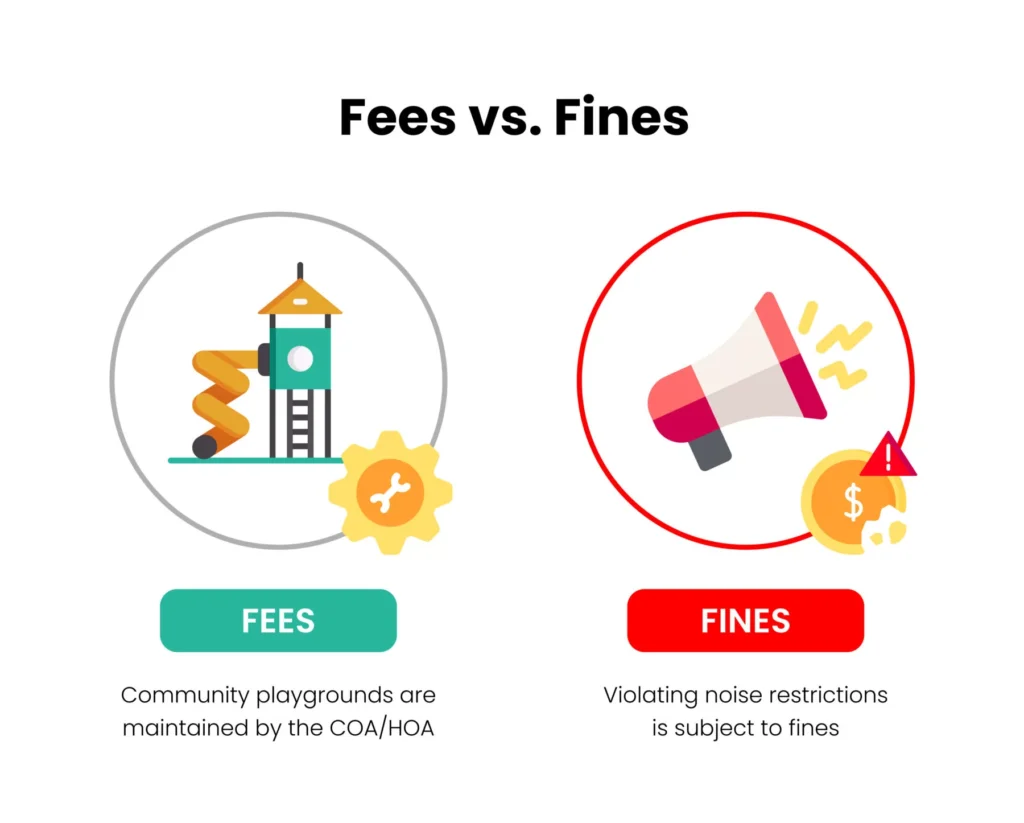
Community associations may charge both fees and fines, but they serve different purposes.
Fees
Fees are planned charges used to fund association operations.
Examples include:
- monthly condo fees
- monthly HOA dues
- reserve fund contributions
These charges are part of the association’s annual operating budget.
Fines
Fines are penalties issued when residents violate association rules.
Examples may include:
- noise violations
- parking violations
- architectural rule violations
- pet policy violations
Unlike fees, fines occur only when a resident breaks a rule.
Special Assessments
Both condominium associations and HOAs may issue special assessments.
A special assessment is a one-time charge used to fund major repairs or unexpected expenses that exceed the association’s current budget.
Examples include:
- structural building repairs
- infrastructure upgrades
- storm damage repairs
- major renovation projects
Special assessments can significantly impact property owners and often appear in association documents reviewed during real estate transactions.
How Condo and HOA Fees Are Calculated
Associations calculate fees using methods defined in their governing documents.
HOA Fee Structure
Many HOA communities charge the same dues for each home. However, some associations use tiered dues based on home size, lot size, or community phases.
Condo Fee Structure
Condo associations typically allocate fees based on factors such as:
- unit size
- ownership percentage
- unit factor or percentage interest
Larger units may pay higher dues because they represent a larger share of the building.
How Condo and HOA Fees Appear in Real Estate Closings
Association-related costs often appear in documents collected during the closing process.
Depending on the state and association, these documents may be called:
- estoppel letters
- status letters
- demand letters
- paid assessment letters
- resale packages
These documents typically confirm:
- current monthly dues
- outstanding balances
- unpaid violations tied to fees
- pending special assessments
- transfer fees or disclosure fees
Because these details affect closing costs, reviewing association documents carefully helps avoid surprises before closing.
Final Thoughts
Condo fees and HOA fees both support the operation and maintenance of community associations, but their responsibilities differ.
Condo fees often cover building infrastructure and shared amenities, while HOA fees typically fund community services and neighborhood maintenance.
Understanding how these fees work helps real estate professionals interpret association documents, identify potential costs earlier in the transaction process, and guide clients through association-related financial obligations.
Since association information can appear across several documents, confirming these details early can help transactions proceed more smoothly.
If your team frequently works with association-governed properties, managing association documents efficiently becomes an important part of keeping closings on schedule.
Talk with our team to simplify your HOA document workflow.
Disclaimer:
This article is provided for informational purposes only and does not constitute legal advice. For interpretation of specific laws or legal obligations, consult qualified legal counsel.